Two big reveals
This is the most dramatic coastline nobody talks about, inches away from one of the best clifftop drives in Europe, equally unheard of.
The Calanques of Cassis
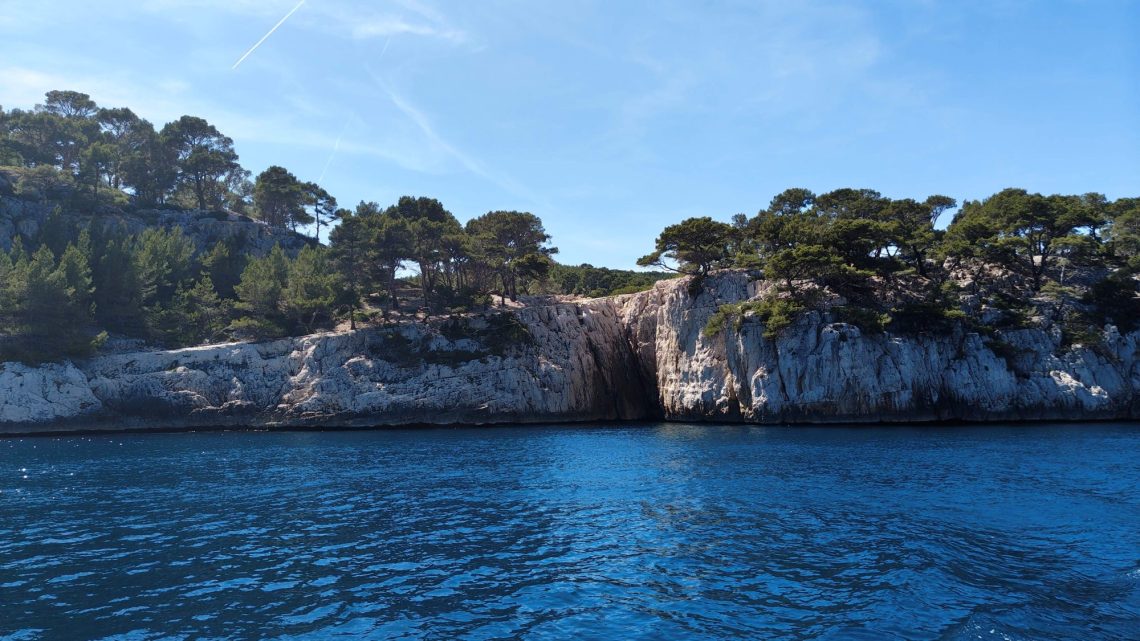
The Calanques are deep limestone fingers cut into the coast between Marseille and Cassis. The Mediterranean fjords. The geology here is dramatic: ancient tropical limestone pushed up from the ocean floor over millions of years, carved out by ice-age rivers, then drowned by the rising sea. Because the rock is nearly pure calcium carbonate, it acts like a giant mirror — and the water turns a color that needs a name. Neon-blue, as if light is iradiating from deep within.
I went to the port of Cassis looking for the boats departure times. Cassis is a jewel of a village, elegant and withdrawn between vinyards, olive farms and the highest falaises in France. It has a harbor full of painted boats and restaurants that actually feed fishermen, and art galleries and real life and you simply must tske your time, but do it after the boat tour.
Down at the port, you find out that you can choose how many calanques you will tour. Depending on season, weather and time you can do three, five, or all nine plus of them, all the way down to Sormiou and Morgiou on the Marseille side. I took the five and off we went. The boat enters each inlet until you’re completely enclosed by white walls, the only exit a rectangle of sea behind you.
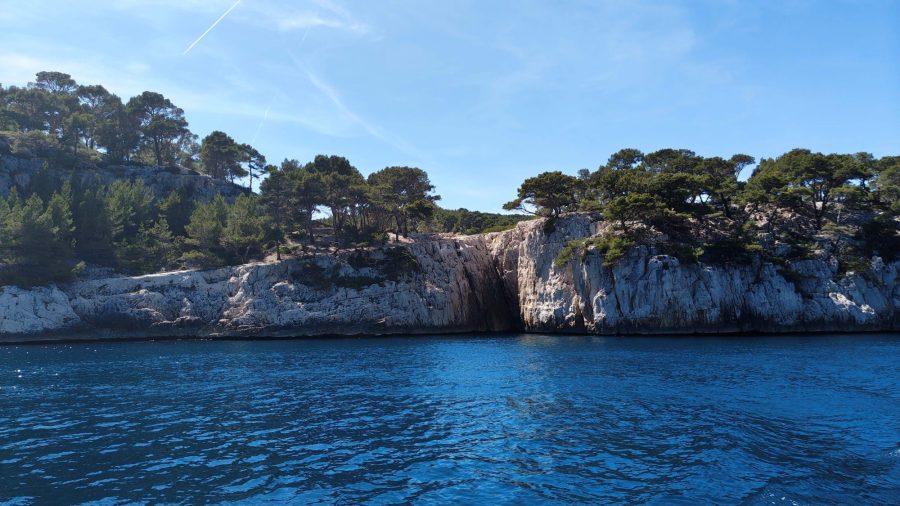
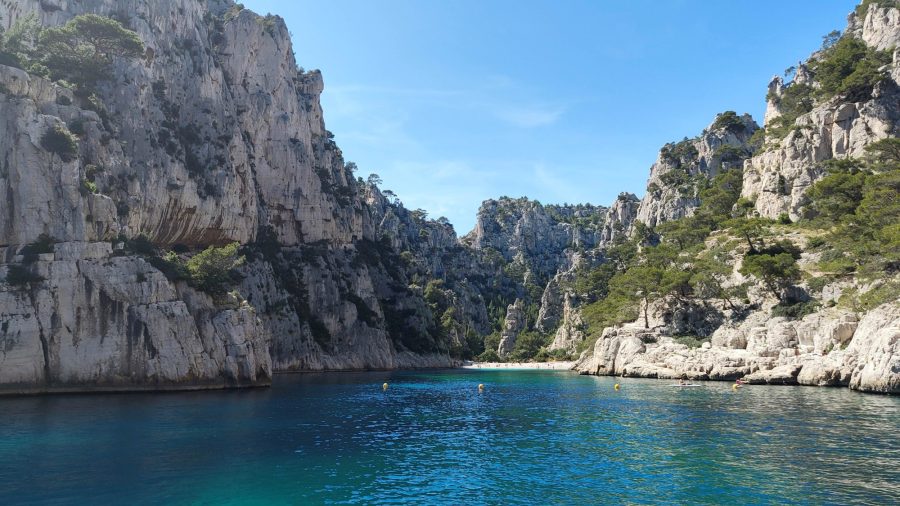
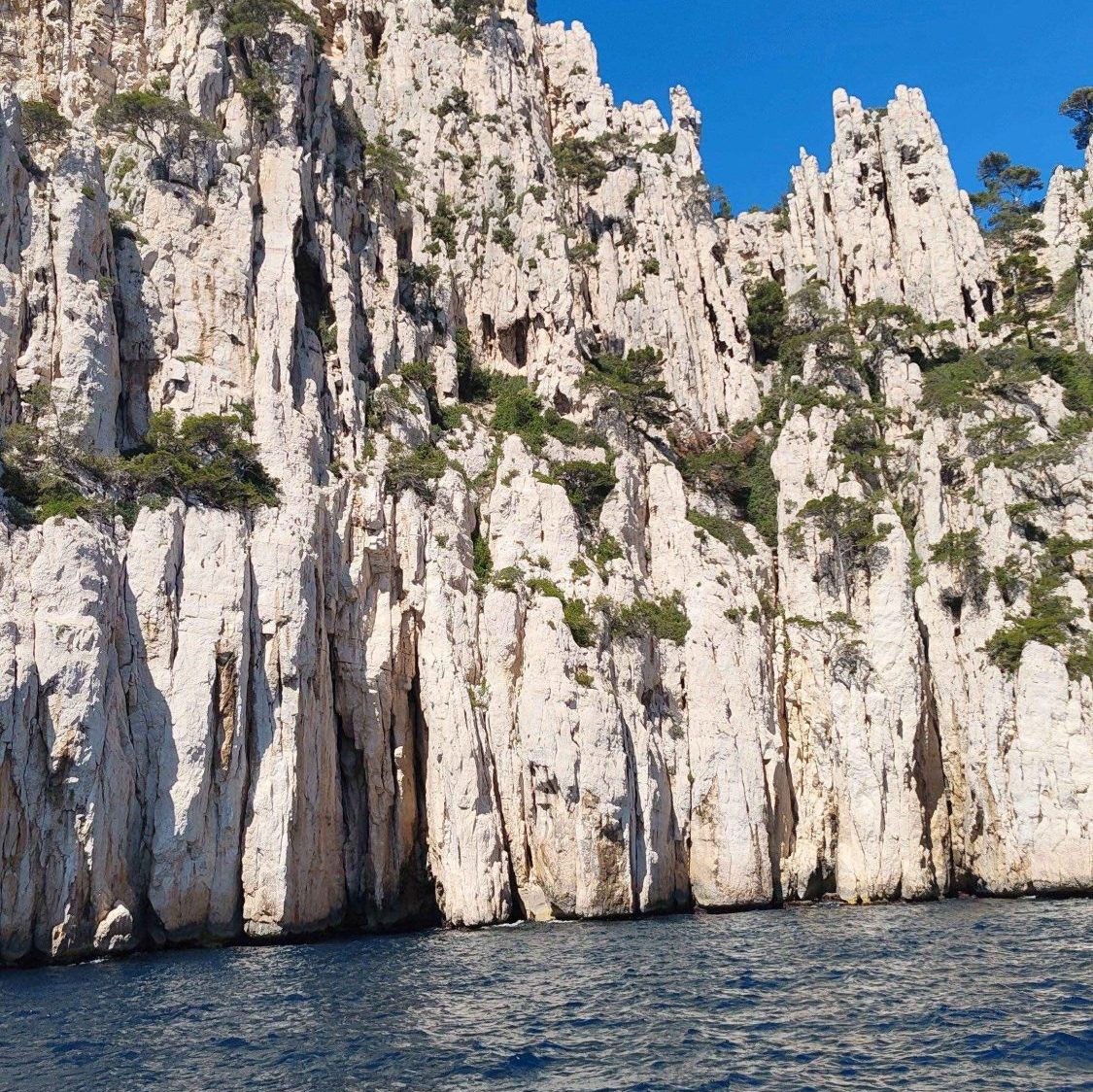
Each one is its own character. Port-Miou is long and narrow, domesticated by its white boats and by the old quarrying that still left the stone blinding white. Port-Pin is softer, almost postcard-pretty, with a pebble beach that makes you want to stay. En-Vau is theatrical: sheer walls, a sliver of beach at the back, fish so clearly visible in the sea underneath. Then there is the Oule.
Oule in Provençal means cauldron. You understand the name the moment you’re near it. The walls close in, the water darkens, the scale of its teeth is intimidating. It was like this long before anyone arrived to look, and it will keep being sublime long after. The fifth is Devenson: also wild and unreachable by land, where a lone islet lies on the water shaped like a sleeping dromedary.
After the boat, I just lingered in Cassis for a while, waiting for the golden hour. Then I drove up the Route des Crêtes.
Route des Crêtes
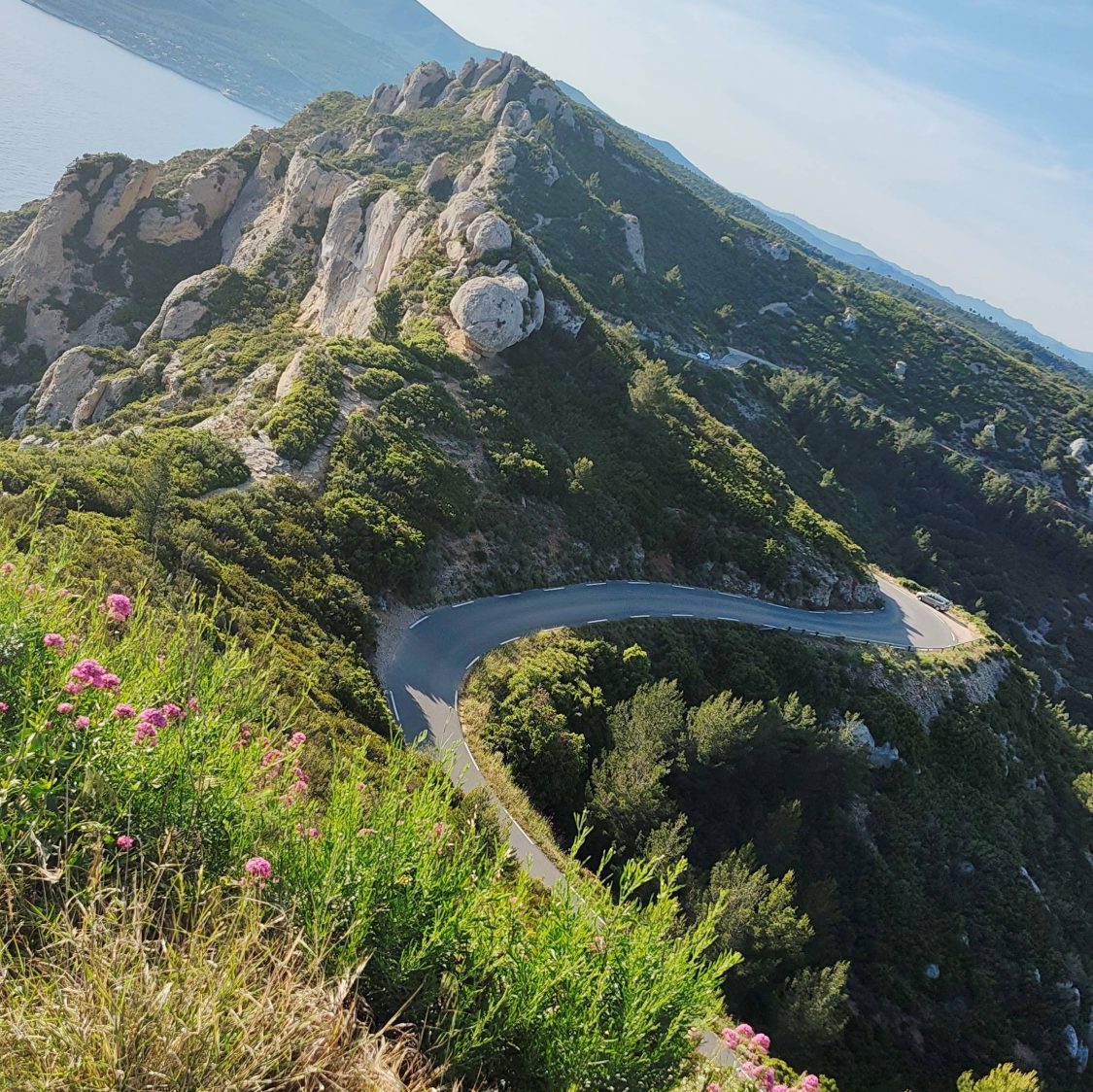
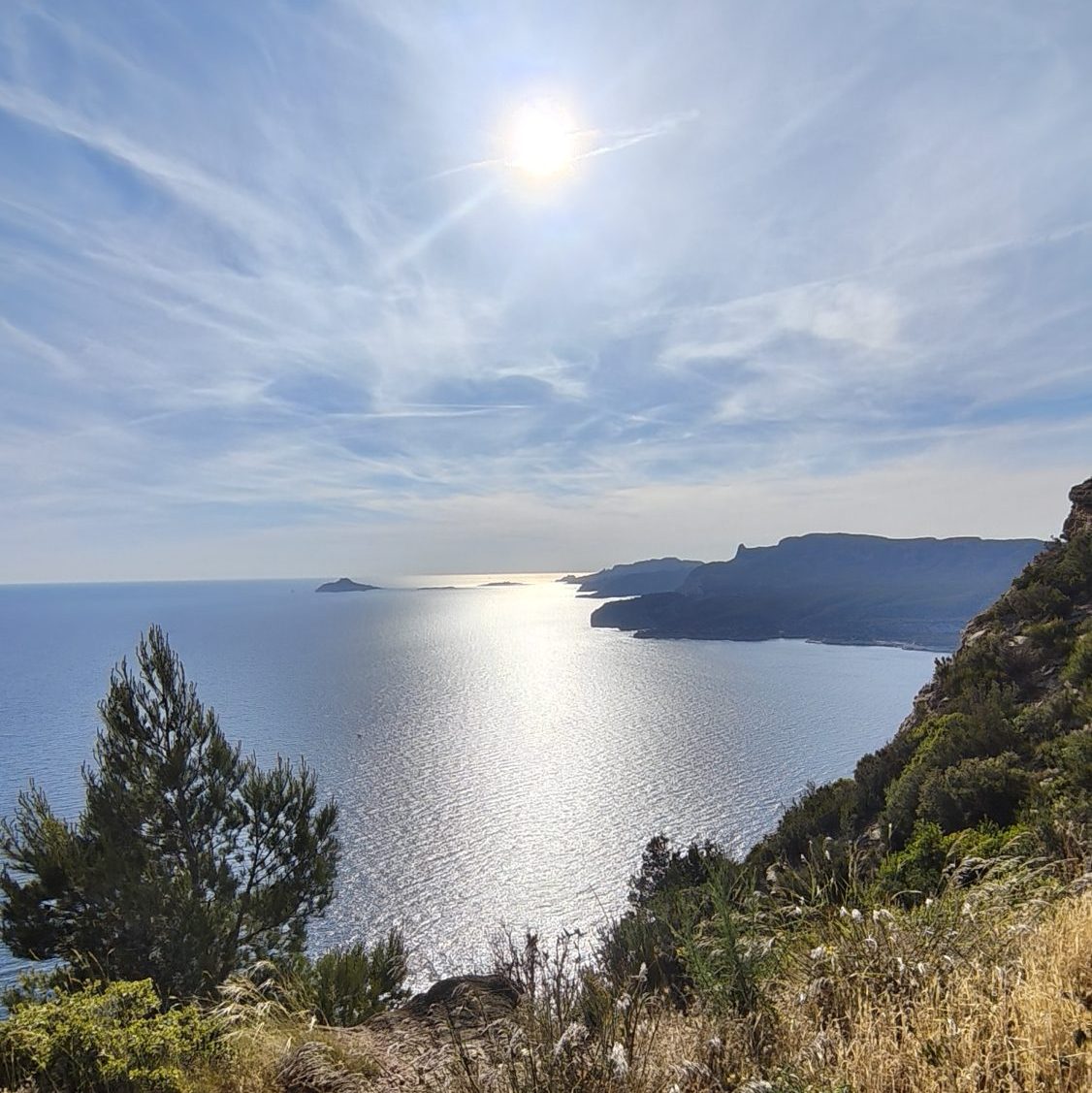
From the harbor, Cap Canaille looks like a challenge for someone else, someone braver and fitter. A massive red cape above the town, ominous and categorically unreachable. Ten minutes up the D141, I was standing at nearly 400 meters above the Mediterranean, on the highest maritime cliffs in France. Cassis, the port, the Calanques spread out below, like a shimmering drawing from a book. The same coast, completely different relationship to scale.
The Route des Crêtes is one of the best drives in Europe, running between Cassis and La Ciotat along the edge of the Falaises Soubeyranes. You stop at belvederes, or just pull over wherever the angle of light is right. There’s no fee, no tour, no particular effort required beyond turning the navigation off and driving slowly. What struck me, beyond the views, was how easy the drive was, and how friendly it is for spontaneous stops, short hikes for yet another photo session, or even a picnic.