You’ve been to Naples. You went to Pompeii. Yet you missed the adventure.
Pompeii gets all the attention. But less than 30 kilometres from Naples, in the other direction, there is another Roman city just as extraordinary — that almost nobody knows exists and even fewer have seen. Because it’s underwater.
Baia didn’t die in a flash of fire like Pompeii. It sank. One breath at a time, over centuries, until the most decadent resort of the Roman Empire became a silent kingdom of fish and seaweed.
The science behind it is called bradyseism — from the Greek for slow movement. The Phlegraean Fields — the vast active volcanic caldera stretching west of Naples — keep its own beat. The volcano here doesn’t explode — not yet, so help us God. It breathes, slowly. It inhales — and the earth rises. It exhales — and everything sinks. Between the 4th and 16th centuries, a long, slow exhale dropped the Baian coastline by more than six metres. The sea didn’t attack. It simply moved into the space.
What it swallowed was extraordinary. Julius Caesar had a villa here. Nero threw his parties in these thermal baths. Hadrian died here in 138 AD. Baia was a high-end spa town built on volcanic vents, famous for its luxury, its thermal waters, and its spectacular moral looseness. Not a commercial city like Pompeii. A playground. The kind of place that doesn’t make it into the official histories but shows up in all the gossip.
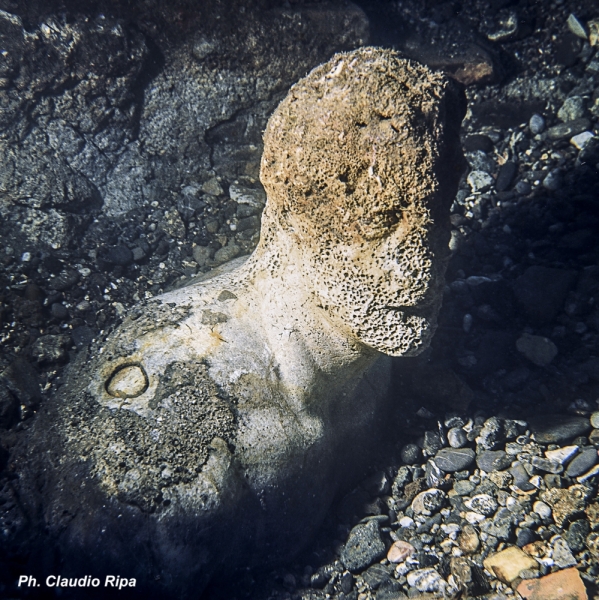
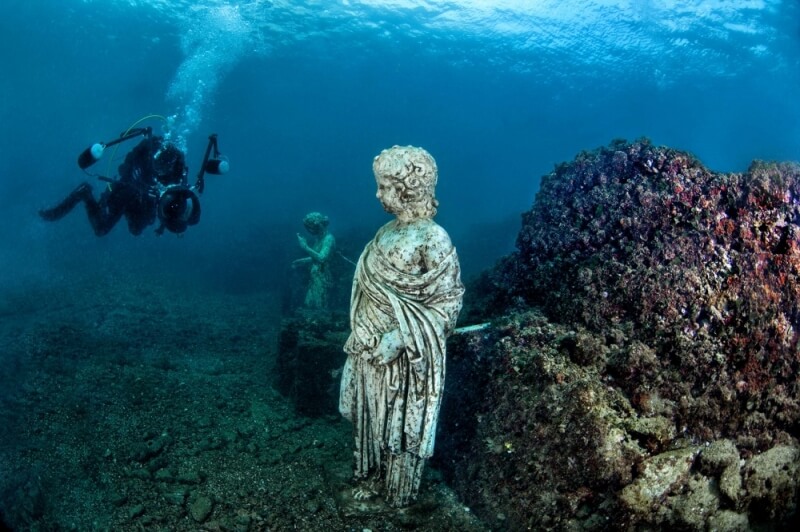
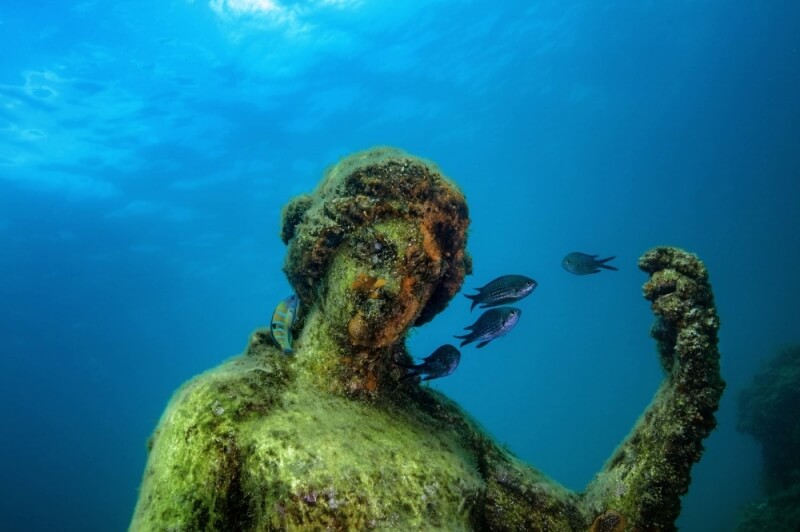
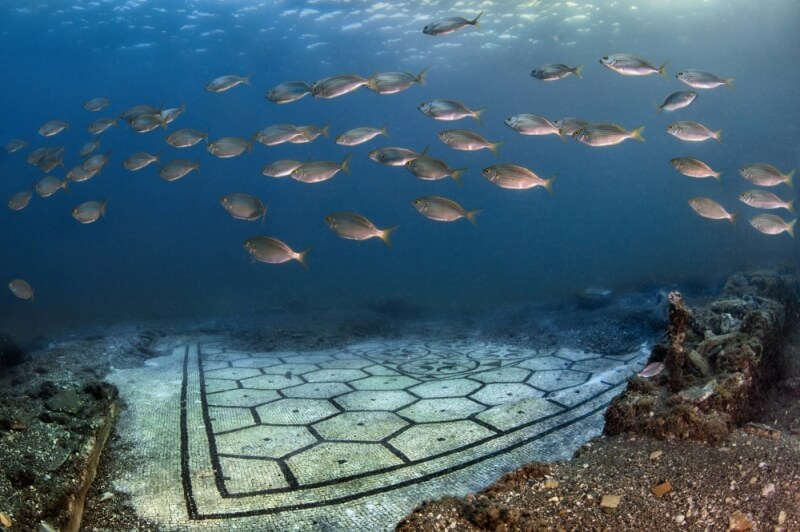
Today, 177 hectares of it lie intact at a depth of about five metres. Shallow enough that the mosaics are still visible from the surface. Shallow enough that the streets still follow their Roman logic beneath you, the doorways still open, the statues muse in place.
The treasure
The Underwater Archaeological Park of Baia sits in the Bay of Pozzuoli, inside the Parco Archeologico Campi Flegrei — about 40 minutes west of Naples. The ruins begin just below the surface, three to five metres down, spread across the shallow floor of the bay. Punta Epitaffio, a rocky promontory and a sight to behold, marks the northern limit of the bay. Seven metres below its waters, Claudius’s banquet hall sits marble-intact, statues still in their niches.
The Intel
There are three ways in. You can snorkel directly over the Villa Protiro and look down through clear water at black-and-white mosaics exactly where the Romans walked on them.
You can dive — if you’re certified — and swim through the rooms of the Nymphaeum of Emperor Claudius, through actual doorways, past protected replicas of the original statues.
Or you stay dry entirely and take the Cymba, a glass-bottom boat departing from the Port of Baia, and watch the sunken streets pass beneath you like a slow dream.
Book through the Parco Archeologico Campi Flegrei. Go between April and October for good underwater visibility.